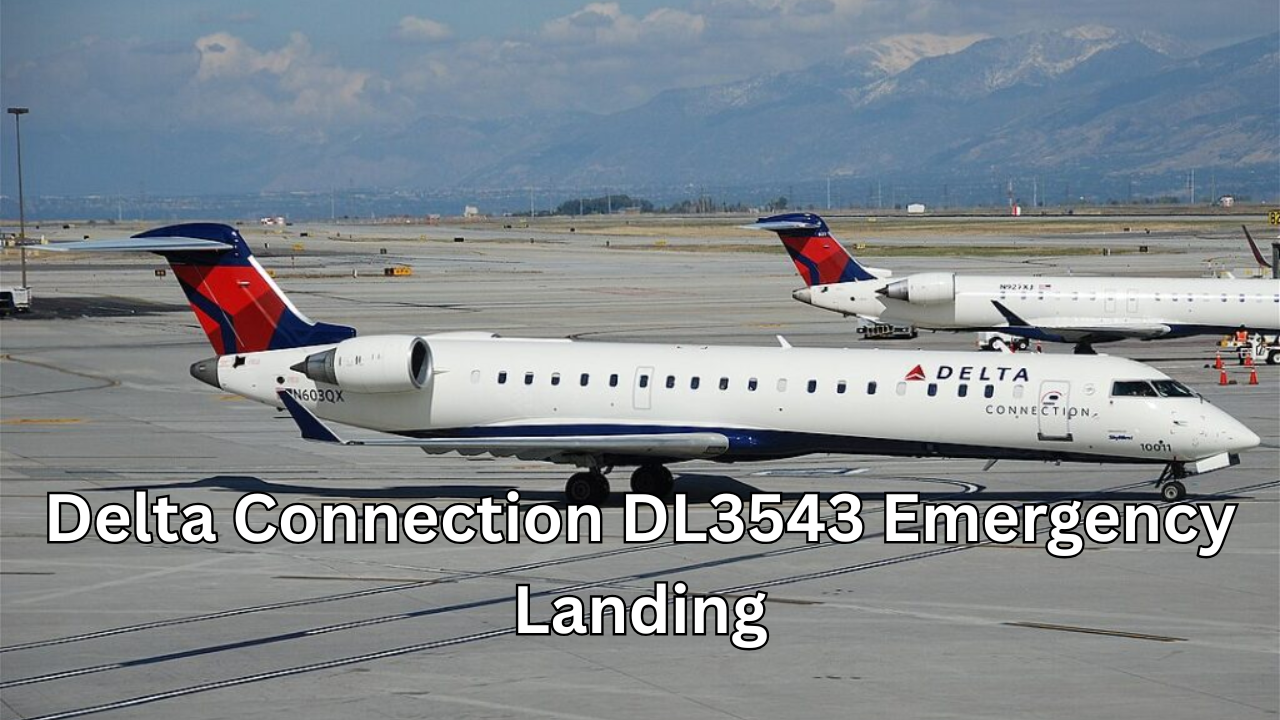
The phrase “Delta Connection DL3543 emergency landing” has recently drawn attention from travelers, aviation enthusiasts, and industry professionals alike. Whenever an aircraft makes an unscheduled or emergency landing, it naturally raises questions about safety, procedures, and its implications for future flights. While commercial aviation remains one of the safest modes of transportation in the world, incidents like these highlight how seriously airlines and pilots take even the smallest potential risk.
This article examines the DL3543 emergency landing, how such events are managed in modern aviation, what passengers should know, and why these incidents often reflect well-functioning safety systems.
Understanding Delta Connection and Flight DL3543
Delta Connection is the regional airline brand under which Delta Air Lines operates short-haul and feeder flights through partner carriers. These flights connect smaller cities to Delta’s major hubs, making them an essential part of the airline’s overall network.
A smaller jet or turboprop aircraft typically operates Flight DL3543 as a regional service. The airline maintains these planes to the same rigorous safety standards as larger mainline aircraft and assigns highly trained professional pilots to fly them.
When news of the Delta Connection DL3543 emergency landing surfaced, many assumed a major technical failure or severe onboard crisis. However, as we discuss the nature of these events, it is important to note that most emergency landings occur due to cautionary or preventative measures rather than catastrophic problems.
To better understand why this landing occurred, let’s review what constitutes an emergency landing in aviation.
An emergency landing is any landing that occurs due to an abnormal or potentially unsafe condition. Importantly, “emergency” does not always mean that passengers are in immediate danger. It often means the flight crew detected something that requires prompt attention on the ground.
Common reasons for emergency landings include:
- Unusual engine readings or warning lights
- Smoke or strange odors in the cabin or cockpit
- Medical emergencies involving passengers or crew
- Hydraulic or electrical system irregularities
- Bird strikes or debris ingestion
- Pressurization issues
- Severe weather avoidance
In most cases, the aircraft is fully controllable, and the pilots land safely as a precaution.

What Likely Triggered the Delta Connection DL3543 Emergency Landing
Airlines do not always release full technical details immediately, but warning indicators or system anomalies often trigger emergency landings, as in the case of Delta Connection flight DL3543.
Modern aircraft are equipped with advanced sensors and diagnostic systems that monitor every critical component in real time. If even a single parameter moves outside its normal range, the cockpit alert system notifies the pilots. At that point, standard operating procedures often require the flight crew to land at the nearest suitable airport.
This conservative approach is a cornerstone of aviation safety. It ensures that minor issues are addressed before they become serious.
How Pilots Are Trained to Handle Situations Like DL3543
Commercial pilots undergo extensive emergency training throughout their careers. This includes:
- Recurrent simulator training every six months
- Practice with engine failures, electrical malfunctions, and fire scenarios
- Decision-making exercises under time pressure
- Crew resource management training
- Communication protocols with air traffic control and cabin crew
When something abnormal occurs, pilots follow structured checklists that guide them step by step. These checklists are designed to reduce human error and ensure that no critical action is overlooked.
In the case of the Delta Connection DL3543 emergency landing, the flight crew would have immediately assessed the situation, consulted the appropriate checklist, coordinated with air traffic control, and prepared the cabin crew and passengers for landing.
What Passengers Experience During an Emergency Landing
For passengers, an emergency landing can be unsettling, especially when the crew mentions the word “emergency.” However, most such landings are smooth and uneventful.
Typical passenger experience includes:
- A calm announcement from the captain explaining that the plane will land as a precaution
- Instructions from the cabin crew to remain seated and fasten seatbelts
- Possible change in flight path or altitude
- Landing at an alternate or nearby airport
- Waiting on the ground while maintenance teams inspect the aircraft
In most cases, passengers are either rebooked on another flight or continue their journey on the same aircraft once the issue is resolved.
Why Emergency Landings Are Actually a Good Sign
It may sound counterintuitive, but an emergency landing often indicates that the safety system worked perfectly.
Rather than ignoring the warning or continuing to the destination despite the potential risk, the pilots chose the safest option available: landing as soon as practical.
This proactive safety culture is why commercial aviation has such an exceptional safety record.
The Delta Connection DL3543 emergency landing fits into this broader pattern of responsible, precautionary decision-making.
Aircraft Maintenance and Post-Landing Inspections
After any emergency or precautionary landing, the aircraft is taken out of service for inspection.
Certified maintenance technicians perform detailed checks that may include:
- Diagnostic system data analysis
- Visual inspection of engines and flight surfaces
- Testing of electrical and hydraulic systems
- Software and sensor recalibration
- Replacement of any suspect components
Engineers and supervisors confirm the aircraft meets all safety and performance standards before returning it to service.
How Airlines Communicate After an Emergency Landing
Airlines typically provide limited public information immediately after such incidents. This is not to hide details, but to ensure accuracy and avoid speculation.
Internal safety and engineering teams conduct thorough investigations, and only confirmed findings are shared later.
For passengers, airlines usually offer:
- Rebooking or refunds
- Hotel accommodation if required
- Meal vouchers or compensation, depending on regulations and circumstances
In the case of Delta Connection DL3543, affected passengers would have been assisted by Delta’s customer service teams to minimize disruption.
Medical Emergencies as a Possible Factor
One of the most common reasons for emergency landings worldwide is a medical issue involving a passenger or crew member.
If someone experiences a heart attack, severe allergic reaction, or other life-threatening condition, the captain may divert the flight to the nearest airport with appropriate medical facilities.
Even if the aircraft itself is perfectly fine, such a diversion is still considered an emergency landing.
Media Attention and Public Reaction
Any aviation incident quickly spreads across social media and news platforms. Headlines featuring terms like “emergency landing” can sound alarming, even when the situation was routine from a professional aviation perspective.
This gap between public perception and technical reality often fuels unnecessary fear.
Understanding the context behind events like the Delta Connection DL3543 emergency landing helps travelers stay informed and confident about flying.
What This Means for Future Delta Connection Flights
Incidents like DL3543 do not indicate a broader safety issue with Delta Connection or regional airlines in general.
Instead, they demonstrate:
- Strong pilot training standards
- Effective onboard monitoring systems
- Conservative safety policies
- Rapid coordination between crew, controllers, and ground teams
Passengers can continue to fly with confidence, knowing that even minor anomalies are handled with maximum caution.
How Travelers Can Stay Calm During an Emergency Landing
If you ever experience a similar situation, here are practical tips:
- Listen carefully to crew instructions.
- Stay seated with your seatbelt fastened.
- Avoid using mobile devices unless permitted.
- Trust the flight crew’s training and experience.
- Remain calm and help reassure fellow passengers.
Your calm behavior helps the crew do their job more effectively.
Final Thoughts on the Delta Connection DL3543 Emergency Landing
The Delta Connection DL3543 emergency landing is a clear example of aviation safety protocols working exactly as intended. Rather than representing danger or negligence, it reflects a disciplined approach to risk management.
Commercial aviation is built around redundancy, early detection, and conservative decision-making. Every warning is treated seriously, and every unusual situation is resolved on the ground rather than in the air.
For passengers, the essential takeaway is that emergency landings indicate a strong commitment to safety. Pilots and airlines act swiftly to protect everyone on board, prioritizing safety above all else.
As long as airlines continue to follow these rigorous standards, flying will remain one of the safest and most reliable ways to travel in the modern world.
Also Read: Meagan Hall: Complete Story, Background, Career, and Why She Went Viral



One thought on “Delta Connection DL3543 Emergency Landing: What Happened, Why It Matters, and What Passengers Should Know”
Comments are closed.