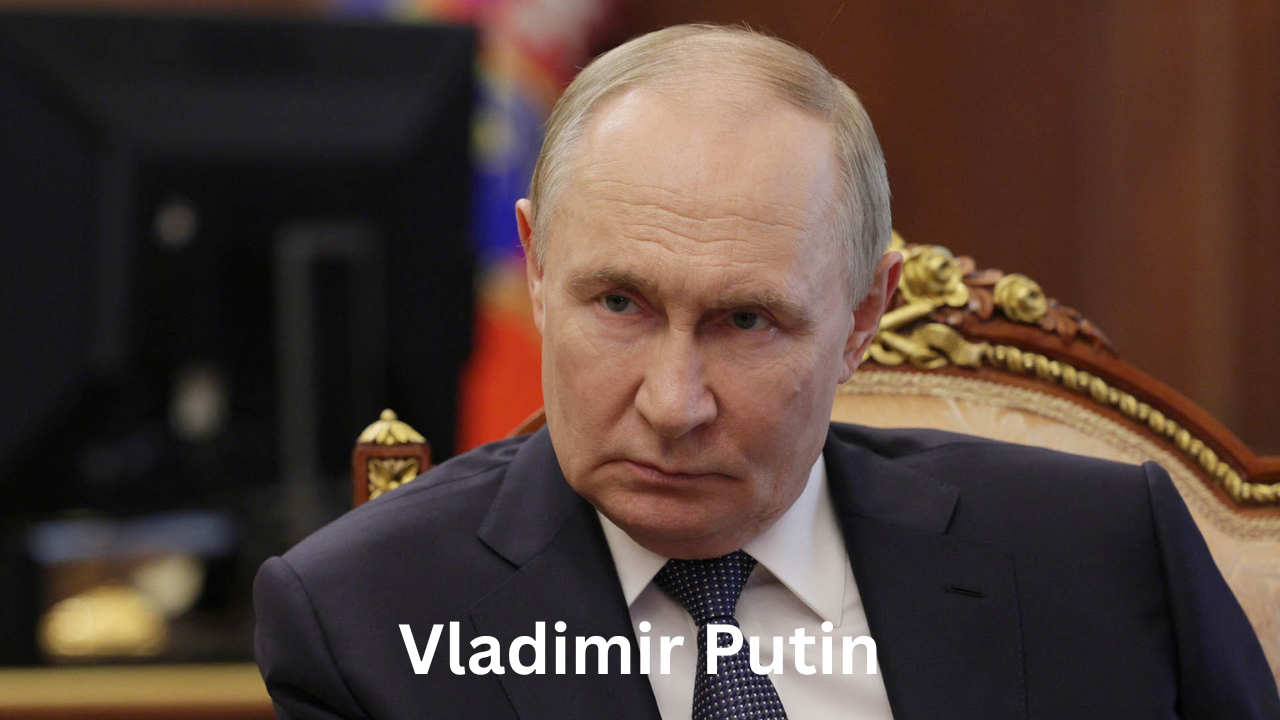
Vladimir Putin is one of the most recognizable and consequential political figures of the modern era. As the president of Russia, he has played a central role in shaping the country’s domestic politics, economy, military strategy, foreign relations, and relationship with major global powers. His career spans the final years of the Soviet Union, the turbulent transition of the 1990s, and more than two decades at the center of Russian political life.
Born in Leningrad, now Saint Petersburg, in 1952, Putin originally trained as a lawyer and later worked for the Soviet security service, the KGB. His experience in government and intelligence helped shape the political style he would later bring to the Kremlin. After entering national politics in the 1990s, he rose rapidly through senior government positions before becoming acting president at the end of 1999.
Today, Vladimir Putin remains Russia’s president. The official website of the President of Russia continues to publish his presidential meetings, government activities, military-related events, and international engagements in 2026.
Understanding Vladimir Putin requires looking beyond headlines. His political career includes major economic and institutional changes inside Russia, an emphasis on national power and security, increasingly assertive foreign policy, and decisions that have generated intense international debate and criticism.
Who Is Vladimir Putin?
Vladimir Putin is a Russian politician who has served as president or prime minister of Russia for much of the period since 1999. His leadership has made him a dominant figure in Russian politics and one of the most closely watched leaders in international affairs.
Putin was born on October 7, 1952, in Leningrad in the Soviet Union. He studied law at Leningrad State University and graduated in 1975. Soon afterward, he joined the KGB, where he worked in Soviet intelligence.
His early professional experience was important to his later political career. Putin spent several years working in East Germany before returning to the Soviet Union. Following the collapse of the Soviet Union, he moved into municipal politics in Saint Petersburg and gradually established relationships within Russia’s political establishment.
His rise was relatively rapid. In 1999, he became prime minister under President Boris Yeltsin. When Yeltsin resigned on December 31, 1999, Putin became acting president. He subsequently won the presidential election in 2000.
Vladimir Putin’s Early Life and Education
Putin grew up in a working-class family in postwar Leningrad. His childhood was shaped by the Soviet environment of the time and by the historical memory of World War II, which had a powerful influence on the city and its residents.
As a young man, Putin became interested in martial arts and later developed a reputation for discipline and physical fitness. He also became interested in intelligence work and reportedly decided to pursue a career in the KGB while still a student.
At Leningrad State University, he studied law. His education provided a foundation for his later government career, while his subsequent KGB service gave him experience in intelligence, security, and state institutions.
These experiences became important elements of the public image Putin developed as a national leader: disciplined, security-conscious, pragmatic, and strongly focused on state power.
Vladimir Putin and the KGB
After graduating from university, Putin joined the KGB, the Soviet Union’s main security and intelligence organization. His career included service abroad in East Germany, where he worked in Dresden.
Putin left active KGB service around the period of the Soviet Union’s collapse. The end of the Soviet system represented a major turning point in his life and in the political environment in which he would later build his career.
His intelligence background has remained an important part of discussions about his leadership. Supporters have sometimes viewed his security experience as an advantage in dealing with national-security issues, while critics argue that it contributed to a highly centralized approach to government and political power.
Vladimir Putin’s Rise to National Power
Following the Soviet collapse, Putin entered local government in Saint Petersburg. He worked with senior officials and gradually developed a reputation as an effective administrator.
In the late 1990s, he moved to Moscow and took positions within the federal government. He became director of the Federal Security Service, the successor to the KGB’s domestic security functions, before being appointed prime minister in 1999.
His appointment as prime minister came during a period of significant political uncertainty. When Boris Yeltsin resigned, Putin became acting president.
The 2000 presidential election marked the beginning of a new political era. Putin won the presidency and soon began consolidating his influence over Russia’s political institutions.
Vladimir Putin as President of Russia
Putin first served as president from 2000 to 2008. During this period, Russia experienced substantial changes in its economy, government structure, and relationship with regional authorities.
One of the major themes of his early presidency was the restoration of what he described as state authority. The federal government increased its influence over regional politics, while the Kremlin strengthened its role in national decision-making.
Russia also benefited from rising energy prices during much of the 2000s. Oil and natural gas were particularly important to the Russian economy, and higher commodity revenues helped the government improve public finances and increase spending in several areas.
Putin left the presidency in 2008 because of constitutional limits at the time, but he remained highly influential.
Vladimir Putin as Prime Minister
From 2008 to 2012, Putin served as prime minister while Dmitry Medvedev served as president. Although Medvedev formally held the presidency, Putin remained a major political force.
The period is often described as part of a broader political arrangement between the two leaders. Putin returned to the presidency in 2012 and subsequently remained at the center of Russian political power.
The constitutional framework governing presidential terms was later changed. Putin won another presidential election in 2018 and was again elected in 2024.
Vladimir Putin’s Political Leadership Style
Putin’s political style is frequently associated with centralized decision-making, emphasis on national sovereignty, and a strong role for the state.
His supporters argue that his leadership restored stability after the economic and political turmoil of the 1990s. They point to improved state finances during the early 2000s, stronger central institutions, and Russia’s increased international influence.
Critics, however, argue that political competition and independent institutions have weakened under his leadership. International organizations, foreign governments, journalists, and Russian opposition figures have raised concerns about political freedoms, media independence, elections, and the treatment of dissent.
Because of these competing interpretations, Vladimir Putin remains a deeply polarizing political figure.
Vladimir Putin and the Russian Economy
Economic policy has been another important part of Putin’s legacy.
During the early years of his presidency, Russia benefited from favorable global energy prices. The government accumulated significant reserves and reduced some of the financial vulnerabilities that had affected the country during the 1990s.
The Russian economy has also faced major challenges. These have included fluctuations in oil prices, international sanctions, demographic pressures, structural economic issues, and the consequences of Russia’s conflicts and foreign-policy decisions.
In recent years, Russia has increasingly emphasized economic self-reliance, domestic production, and closer economic relationships with countries outside the Western alliance system.
The impact of sanctions and changing international trade patterns has become a major subject in discussions about Russia’s economic future.
Vladimir Putin and Foreign Policy
Foreign policy is perhaps the area where Putin has had the greatest impact on Russia’s relationship with the rest of the world.
Under his leadership, Russia has sought to maintain and expand its influence in neighboring regions while strengthening relationships with countries such as China, India, Iran, and other non-Western partners.
Relations between Russia and Western countries have become particularly strained over the years. NATO expansion, European security, the conflicts in Georgia and Ukraine, and disagreements over international interventions have all contributed to growing tensions.
Putin has repeatedly argued that Russia has legitimate security interests in its surrounding region and has criticized what he views as excessive Western influence.
Western governments and many international observers have strongly disputed aspects of these arguments and have accused Russia of violating the sovereignty of neighboring states.
Vladimir Putin and Ukraine
The relationship between Russia and Ukraine has become one of the defining issues of Putin’s presidency.
Russia’s annexation of Crimea in 2014 and its support for separatists in eastern Ukraine triggered a major deterioration in relations between Russia and Western countries.
The situation escalated dramatically in February 2022, when Russia launched a full-scale invasion of Ukraine.
The war has had enormous consequences. It has resulted in widespread destruction, civilian suffering, displacement, military casualties, economic disruption, and a major transformation of European security policy.
Russia’s government has presented its military actions through its own national-security and political arguments. Ukraine and its international supporters have rejected those justifications and described the invasion as an act of aggression against a sovereign country.
The war has also led to extensive international sanctions against Russia and has reshaped diplomatic and economic relationships around the world.
Vladimir Putin and Global Politics
Putin’s influence extends far beyond Russia’s borders. His government has pursued relationships with major powers and emerging economies while challenging aspects of the Western-led international system.
Russia remains an important military, nuclear, energy, and diplomatic power. Its permanent membership in the United Nations Security Council also gives Moscow significant influence in international affairs.
Putin has promoted the idea of a more multipolar global order in which multiple major powers have greater influence rather than a system dominated primarily by the United States and its allies.
This vision has found varying levels of support internationally, but it has also contributed to increasing geopolitical competition.
Vladimir Putin’s Current Role
As of August 2026, Vladimir Putin remains president of Russia. The Kremlin’s official website continues to list his presidential activities, including meetings with government officials, regional leaders, military personnel, and representatives of scientific and educational institutions.
The official presidential website also provides information about government activities, presidential events, legal documents, and communications with Russian citizens.
His current political agenda continues to involve national security, the Russian economy, military affairs, international relations, technological development, and Russia’s position in the changing global order.
Vladimir Putin’s Legacy
Assessing Vladimir Putin’s legacy is complicated because his political career is still ongoing.
Supporters commonly associate his leadership with greater political stability, stronger state institutions, economic recovery during the early 2000s, and a restoration of Russia’s international influence.
Critics emphasize the concentration of political power, restrictions on opposition activity, concerns about media freedom, and Russia’s military actions abroad.
The full historical assessment of Putin’s leadership will likely depend on developments that have not yet occurred. Historians will examine both Russia’s internal transformation and the consequences of its foreign-policy decisions.
Frequently Asked Questions About Vladimir Putin
Who is Vladimir Putin?
Vladimir Putin is the president of Russia and one of the country’s most influential political leaders. He previously served as prime minister and held senior government and intelligence positions.
When did Vladimir Putin become president?
Putin became acting president on December 31, 1999, following Boris Yeltsin’s resignation. He won the presidential election in 2000.
What did Vladimir Putin do before politics?
Before entering national politics, Putin worked for the Soviet KGB. He later served in local government in Saint Petersburg before moving into senior federal positions in Moscow.
How long has Vladimir Putin been in power?
Putin has been the dominant figure in Russian national politics since 1999, serving multiple terms as president and a period as prime minister.
Why is Vladimir Putin internationally important?
Putin leads a major nuclear-armed country with significant military, energy, economic, and diplomatic influence. His government’s policies have had major effects on European security and global geopolitics.
Is Vladimir Putin still president of Russia?
Yes. As of August 2026, Vladimir Putin remains president of Russia, according to the official Kremlin website, which continues to publish current presidential activities.
Final Thoughts on Vladimir Putin
Vladimir Putin has shaped Russian politics for more than two decades and has become one of the most influential leaders of the 21st century. From his early career in Soviet intelligence to his rise through Saint Petersburg politics and the Kremlin, his journey reflects many of the major political changes Russia has experienced since the collapse of the Soviet Union.
His presidency has been associated with economic recovery and greater state authority by supporters, while critics point to political centralization, restrictions on dissent, and military intervention abroad. His role in the war in Ukraine has further transformed Russia’s relationship with Europe, the United States, and other countries.
Whatever historical judgment ultimately emerges, Vladimir Putin’s impact on Russia and international politics is difficult to overlook. His decisions continue to influence global security, diplomacy, energy markets, and the balance of power between major nations.
Also Read: Rob Rausch: Biography, Age, Career, Love Island Journey, The Traitors Win and More