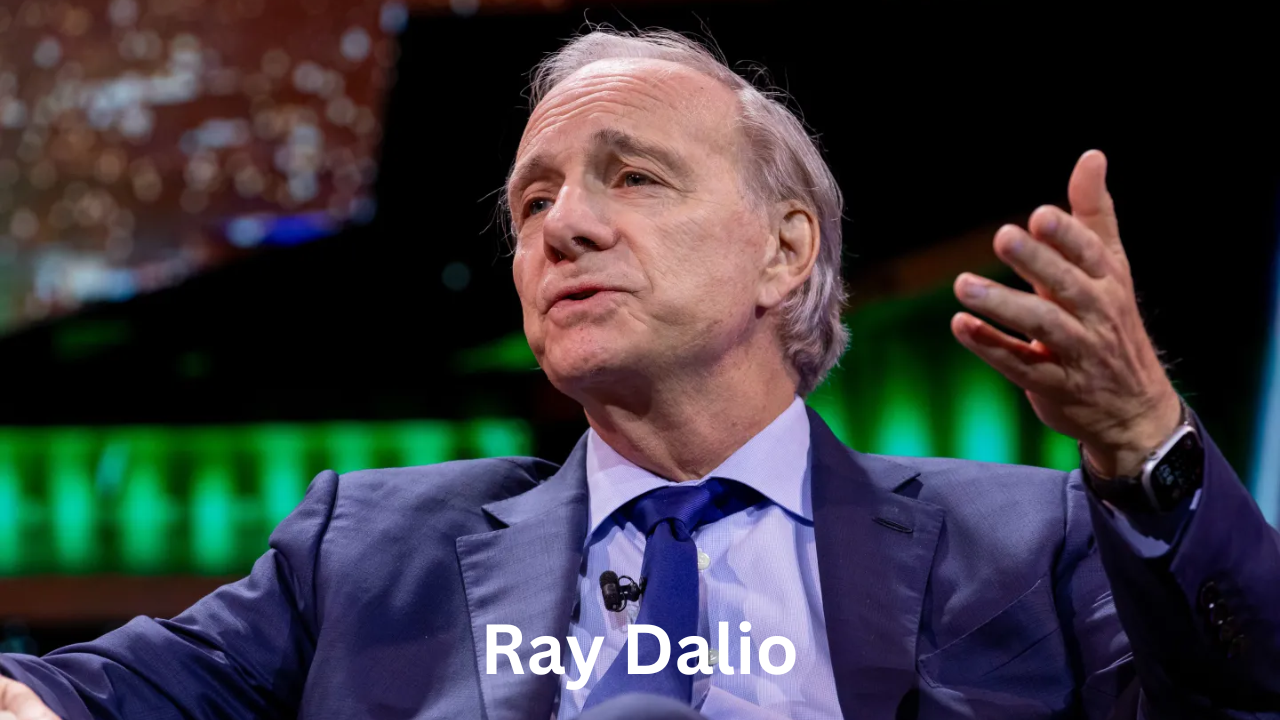
Ray Dalio is one of the most influential investors of the modern era, best known for founding Bridgewater Associates and developing a distinctive approach to investing, decision-making, economics, and leadership. His career has attracted worldwide attention not only because of his success in finance but also because of the principles he developed after decades of studying markets, mistakes, human behavior, and economic cycles.
From starting Bridgewater in a two-bedroom apartment in New York City in 1975 to building it into a major global investment organization, Ray Dalio created a career based on systematic thinking, diversification, learning from failure, and understanding how economic forces interact.
Today, Ray Dalio is also widely recognized as an author and educator. His ideas about radical transparency, thoughtful disagreement, decision-making, and economic cycles have reached millions of readers and viewers around the world. His books, including Principles: Life and Work, have helped introduce his philosophy to audiences far beyond Wall Street.
Who Is Ray Dalio?
Ray Dalio is an American investor, entrepreneur, author, and philanthropist. He founded Bridgewater Associates in 1975 after developing an early interest in financial markets. Rather than building his career around conventional investing alone, Dalio became known for creating systems designed to understand economies and markets through historical patterns, data, diversification, and disciplined decision-making.
According to Bridgewater’s official biography, Dalio grew up in a middle-class Long Island neighborhood and became interested in investing when he was 12 years old. His first stock purchase came from money he earned while working as a golf caddie. That early experience helped establish an interest that would eventually become his life’s work.
Dalio later attended C.W. Post College, where he studied finance, before earning an MBA from Harvard Business School in 1973. After working at several Wall Street firms, he founded Bridgewater two years later.
His story is particularly interesting because the company did not begin as a giant financial institution. Dalio started Bridgewater from his apartment, gradually building a research-driven investment business that eventually became one of the best-known names in the hedge fund industry.
The Early Career of Ray Dalio
Ray Dalio’s early career was shaped by his fascination with financial markets and his willingness to learn from mistakes.
After completing his education, Dalio worked at firms including Shearson Hayden Stone. These experiences exposed him to trading, commodities, futures, and the broader forces influencing financial markets.
One of the most important lessons of his early career came from failure. Dalio made a major market prediction that turned out to be wrong, resulting in substantial financial consequences for his young company. Instead of allowing the setback to end his career, he treated the experience as an opportunity to understand where his thinking had failed.
That philosophy became central to Dalio’s approach: mistakes were not simply things to avoid. They were opportunities to identify weaknesses, improve systems, and make better decisions in the future.
This emphasis on learning from failure would later become one of the most recognizable elements of the Ray Dalio philosophy.
How Ray Dalio Founded Bridgewater Associates
In 1975, Ray Dalio founded Bridgewater Associates from his two-bedroom apartment in New York City. The company initially focused heavily on providing economic research and market insights to institutional clients.
During Bridgewater’s early years, Dalio developed research around commodities, currencies, interest rates, and economic relationships. The firm’s research publication, known as Bridgewater Daily Observations, became an important part of its relationship with clients.
A major milestone came in 1985 when Bridgewater received a $5 million account from the World Bank. That institutional relationship helped establish the firm as a serious player in professional asset management.
Over the following decades, Bridgewater developed increasingly systematic investment methods. Dalio and his colleagues studied historical economic events to understand recurring relationships between growth, inflation, interest rates, currencies, and asset prices.
This research-oriented mindset eventually helped Bridgewater develop strategies such as Pure Alpha and All Weather.
Ray Dalio’s Investment Philosophy
One of the most important reasons people search for Ray Dalio is his investment philosophy.
Dalio believes that financial markets are influenced by recurring cause-and-effect relationships. Economic conditions change, but many underlying forces tend to repeat. By studying historical examples, investors can potentially gain a better understanding of how different environments affect assets.
Instead of trying to predict one specific future outcome, Dalio has emphasized preparing for multiple possible environments.
This philosophy is closely connected to diversification.
Rather than putting all capital behind a single prediction, a portfolio can be constructed with investments that respond differently to changing economic conditions. The objective is not necessarily to maximize returns in one ideal scenario. It is to build a portfolio that can remain resilient across different environments.
Bridgewater’s official description of Dalio’s investment approach highlights the importance of understanding markets across long historical periods and using systematic processes to evaluate investment decisions.
What Is the All Weather Strategy?
The All Weather approach is one of the concepts most closely associated with Ray Dalio.
The basic idea is that investors cannot know exactly what the future economic environment will look like. Growth may rise or fall, while inflation may also increase or decrease. Instead of building a portfolio around one forecast, the All Weather philosophy seeks diversification across different economic scenarios.
The strategy became influential because it encouraged investors to think about portfolios in terms of risk exposure rather than simply the number of investments owned.
For example, owning many assets does not automatically mean a portfolio is properly diversified if those assets are all affected by the same economic forces.
Dalio’s approach therefore focuses on understanding how assets behave under different combinations of economic growth and inflation.
The broader concept of risk parity became an important development in modern portfolio construction, and Bridgewater identifies All Weather as one of the investment innovations associated with Dalio’s career.
Ray Dalio and the Principles of Decision-Making
Beyond investing, Ray Dalio became famous for his approach to decision-making.
His philosophy emphasizes thinking independently while remaining open to evidence that could prove an existing belief wrong. This is important because investors, business leaders, and individuals can easily become attached to their own opinions.
Dalio’s principles encourage people to separate what they want to be true from what reality actually shows.
His official principles materials emphasize ideas such as radical open-mindedness, understanding cause-and-effect relationships, learning from mistakes, and developing explicit principles for handling recurring situations.
This approach can be applied outside finance as well.
For example, when a business decision produces a poor result, the lesson is not simply that the decision was bad. A person can ask why it happened, what assumptions were incorrect, what information was overlooked, and how a similar mistake can be prevented.
What Is Radical Transparency?
Radical transparency is another major concept associated with Ray Dalio and Bridgewater.
Dalio argued that organizations can make better decisions when people are encouraged to communicate openly and challenge ideas rather than simply agreeing with senior leaders.
Bridgewater’s philosophy describes an environment where disagreements can be explored openly because the objective is to improve the quality of decisions rather than protect someone’s position or ego.
This approach is connected to what Dalio calls an “idea meritocracy.” The central concept is that the best idea should have influence because of its quality, not simply because of the person’s job title.
Although this management style has generated debate, it became a defining characteristic of Bridgewater’s organizational culture.
Ray Dalio’s Book Principles: Life and Work
One of Ray Dalio’s biggest contributions outside investment management is his book Principles: Life and Work.
The book presents many of the lessons Dalio accumulated during his professional career. Rather than presenting success as the result of one secret investment formula, the book focuses on developing principles that can guide decisions.
Major themes include learning from mistakes, embracing reality, being open-minded, understanding weaknesses, building strong teams, and creating systems for better decision-making.
The official Principles website explains that Dalio credits his success largely to the principles he developed rather than to any unique personal quality.
That distinction is important. Dalio’s message is not simply “copy my investment strategy.” Instead, he encourages people to develop their own principles based on experience and evidence.
Ray Dalio’s Views on Economic Cycles
Economic cycles are another major part of Ray Dalio’s work.
Dalio has spent decades studying how debt, money, credit, productivity, interest rates, and government policies interact. His explanations often attempt to make complicated economic concepts easier to understand by showing how different forces influence one another.
One of his best-known educational concepts is that economies operate through recurring cycles. Periods of borrowing, spending, expansion, tightening, and deleveraging can create patterns that appear repeatedly throughout history.
This historical perspective is particularly useful for investors because financial markets are not isolated from the broader economy.
Interest rates can influence borrowing costs. Credit conditions can influence spending. Inflation can affect purchasing power. Central bank policy can influence financial markets. Understanding these connections can help investors think beyond individual stocks or short-term market movements.
Ray Dalio’s Leadership at Bridgewater
Dalio’s influence at Bridgewater extended far beyond portfolio management.
He helped shape an organizational culture based on excellence, truth-seeking, disagreement, and continuous improvement. Bridgewater’s official account states that Dalio stepped down as CEO in 2017, as CIO in 2020, and as chairman at the end of 2021. He subsequently focused more heavily on mentoring and passing along the principles he developed throughout his career.
This transition represented a major stage in his professional life.
Instead of remaining permanently involved in day-to-day leadership, Dalio increasingly concentrated on sharing knowledge about investing, economics, decision-making, and personal development.
Ray Dalio’s Wealth and Financial Success
Ray Dalio is widely regarded as a billionaire, reflecting the enormous success of his career in investment management.
However, exact estimates of an individual’s wealth can change significantly because of market movements, private investments, asset valuations, and other factors. For that reason, published net worth estimates should be treated as estimates rather than fixed numbers.
More important than a specific wealth figure is the scale of Dalio’s influence.
His career transformed a small investment firm founded in an apartment into a global financial institution, while his ideas expanded beyond investing into management, economics, education, and personal development.
Ray Dalio’s Work Beyond Investing
In recent years, Dalio has increasingly focused on sharing knowledge.
His official website describes his current phase as one centered on passing along principles and tools that can help others succeed.
His interests have also extended into philanthropy, ocean exploration, and broader questions about society and the future.
This evolution demonstrates how his career has expanded from managing money to studying systems more generally.
Whether discussing financial markets, organizations, economics, or human behavior, the common theme is his interest in understanding how complex systems work.
Why Ray Dalio Remains Influential
Ray Dalio remains influential because his work combines investing with a broader philosophy of learning and decision-making.
Several ideas particularly stand out:
- Learn from mistakes instead of hiding them.
- Separate opinions from evidence.
- Remain open to being wrong.
- Study history to identify recurring patterns.
- Diversify against uncertainty.
- Build systems that reduce emotional decision-making.
- Encourage thoughtful disagreement.
- Focus on continuous improvement.
- Develop principles that can guide future decisions.
These concepts have applications well beyond Wall Street.
An entrepreneur can use them to evaluate business failures. A manager can use them to improve organizational decision-making. An investor can use them to think about risk. An individual can use them to create better personal habits.
Frequently Asked Questions About Ray Dalio
Who is Ray Dalio?
Ray Dalio is an American investor, entrepreneur, author, and philanthropist who founded Bridgewater Associates in 1975. He became known for his global macro investment approach and his principles for decision-making and organizational culture.
What is Ray Dalio famous for?
Ray Dalio is best known for founding Bridgewater Associates, developing investment approaches such as All Weather and Pure Alpha, and writing about principles, economics, leadership, and decision-making.
Did Ray Dalio write Principles?
Yes. Ray Dalio wrote Principles: Life and Work, a book that explains many of the principles he developed throughout his career. The book focuses on learning from experience, understanding reality, decision-making, relationships, and professional success.
What is Ray Dalio’s investment philosophy?
Dalio’s investment philosophy emphasizes diversification, understanding economic cycles, studying historical patterns, managing risk, and preparing for different economic environments rather than relying entirely on one forecast.
What does Ray Dalio mean by radical transparency?
Radical transparency refers to an organizational approach that encourages open communication and honest discussion. At Bridgewater, the concept is connected to challenging ideas and seeking better answers rather than allowing hierarchy alone to determine decisions.
Is Ray Dalio still running Bridgewater?
No. Dalio stepped down from the CEO role in 2017, the CIO role in 2020, and the chairman role in 2021. Bridgewater describes him today as primarily focused on mentoring and sharing the principles he developed during his career.
Final Thoughts on Ray Dalio
Ray Dalio’s career offers a valuable example of how long-term success can come from combining curiosity, disciplined thinking, risk management, and a willingness to learn from failure. His journey from a young investor fascinated by the stock market to the founder of Bridgewater Associates demonstrates the power of building systems around lessons learned over time.
The most enduring part of the Ray Dalio legacy may not be a particular investment strategy or financial achievement. It is his emphasis on learning how reality works, questioning assumptions, understanding cause and effect, and continuously improving decision-making.
For investors, entrepreneurs, managers, and anyone interested in personal development, Dalio’s principles provide a framework for thinking more objectively about uncertainty and making better decisions.
As financial markets and the global economy continue to change, the ideas associated with Ray Dalio remain relevant because they focus on something that does not depend on a single market cycle: the importance of learning, adapting, managing risk, and remaining open to new information.
Also Read: Steve Cohen: Biography, Career, Net Worth, Investments, and Business Legacy